
Singapore’s Green Fuel Pivot and Your Wallet
The global aviation industry is currently facing a "stressed barrel" crisis that threatens to redefine the cost of leisure travel for the remainder of the decade. As the world transitions toward green aviation, the primary raw material—used cooking oil—is facing severe supply bottlenecks and market fraud. In response, Singapore is positioning itself as a laboratory for alternative fuels. While these projects on Jurong Island and Pulau Bukom promise long-term sustainability, the immediate personal finance implication for residents is a significant and permanent increase in the cost of flying.
The Rising Price of Your Next Flight
Sustainable aviation fuel (SAF) is currently the only viable path to decarbonising the skies, but it comes with a heavy "green premium." Traditional SAF, derived from fats and oils, typically costs between two and five times the price of regular jet fuel. As Singapore implements mandates requiring 1 per cent of all fuel at Changi and Seletar airports to be green by 2026—rising to 5 per cent by 2030—airlines will inevitably pass these costs to the consumer.
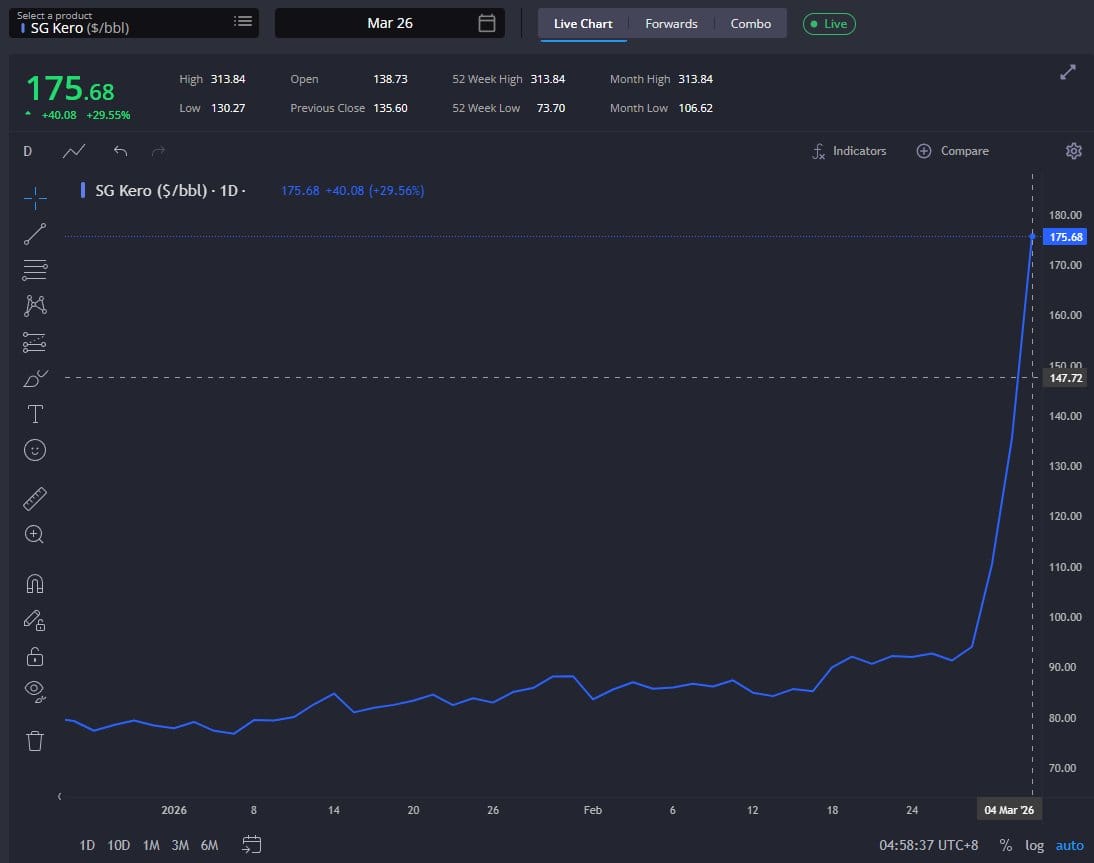
For the average traveller, this is effectively a "carbon tax" on every boarding pass. The unfolding conflict in the Middle East has further stressed the aviation barrel, with crude deliveries stuck at the Straits of Hormuz and refinery runs being reduced. Unlike diesel or gasoline, jet fuel has highly specialised storage requirements, meaning there is very little buffer in the system. When you combine low storage levels with the high cost of green alternatives, the result is a recipe for record-high airfares throughout 2026.
Diversifying Beyond Used Cooking Oil
To mitigate the inelastic supply of used cooking oil, Singapore-backed ventures are racing to develop alternative feedstocks. A significant partnership between refiner Aster and asset manager Keppel is exploring a massive plant on Jurong Island intended to produce 100,000 tonnes of green fuel annually. Crucially, this project will tap into low-carbon ethanol rather than waste oils, making it one of the first "ethanol-to-jet" (EtJ) commercial facilities in Asia.
Another venture on Pulau Bukom is targeting the conversion of industrial waste gases and biomethane into jet fuel via the Fischer-Tropsch process. While these technologies are nascent and expensive, they are essential for "supply chain resilience." For investors, these projects signal a shift in where capital is flowing within the energy sector. As road fuel demand for ethanol is projected to decline by nearly 48 per cent by 2050, the conversion of these resources into aviation fuel represents a major "Realised Gain" for companies that can scale the technology early.
Hedging Against Aviation Inflation
From a personal finance perspective, the 2026 landscape requires a strategic rethink of both travel budgets and investment portfolios. If travel is a non-negotiable part of your lifestyle, the rising cost of fuel suggests that booking further in advance and leveraging credit card miles has never been more critical. However, a more sophisticated approach involves hedging against these costs by investing in the infrastructure behind the transition.
Institutional giants like Keppel are no longer just managing properties; they are becoming essential players in the green energy supply chain. By holding exposure to firms involved in the EtJ and hydrogen-based fuel processes, investors can potentially offset their personal travel inflation with corporate growth. While some industry sceptics call the 2050 net-zero goal "pie in the sky," the regional mandates in Thailand, Malaysia, and Singapore suggest that the green transition is a legislative reality. In 2026, the smartest financial move is to accept that the era of cheap, carbon-heavy flights is over and to align your capital with the "new energy" hubs being built right here in the Republic.

Shaun
Founder
With over a decade of expertise spanning investment advisory, investment banking analysis, oil trading, and financial advisory roles, RealisedGains is committed to empowering retail investors to achieve lasting financial well-being. By delivering meticulously curated investment insights and educational programs, RealisedGains equips individuals with the knowledge and tools to make sophisticated, informed financial decisions.



Founder, Analyst
With over a decade of expertise spanning investment advisory, investment banking analysis, oil trading, and financial advisory roles, RealisedGains is committed to empowering retail investors to achieve lasting financial well-being. By delivering meticulously curated investment insights and educational programs, RealisedGains equips individuals with the knowledge and tools to make sophisticated, informed financial decisions.

© 2026 RealisedGains | All Rights Reserved | www.realisedgains.com
The go to platform that keeps you informed on the financial markets. Best of all, it's free.
RealisedGains
The go to platform that keeps you informed on the financial markets. Best of all, it's free.
About
Products
Tools
Market News
Personal Finance
Socials
© 2026 RealisedGains | All Rights Reserved | www.realisedgains.com