
Singapore & Asia Stock Market Volatility
A Market Shaken by Trade Tensions
In April 2025, global stock markets are reeling from the shockwaves of President Donald Trump’s aggressive tariff policies, with Singapore and broader Asian exchanges at the epicenter of the turbulence. The announcement of a 10% baseline tariff on imports from most countries, effective April 5, followed by a 90-day pause on additional tariffs for all but China, triggered a roller-coaster ride for investors. Singapore’s Straits Times Index (STI) surged nearly 8% on April 10, marking its largest single-day gain since October 2008, only to stabilize amid lingering uncertainties. Across Asia, Japan’s Nikkei 225 and South Korea’s Kospi indices faced sharp declines, with China’s Shanghai Composite battered by a 145% U.S. tariff. These market swings underscore a critical reality: while the tariff pause offers temporary relief, the volatility in Singapore and Asian stock markets demands strategic navigation from investors and policymakers alike.
Trump’s Tariff Shock
Trump’s tariff strategy, designed to protect U.S. industries and narrow the trade deficit, has unleashed chaos in global financial markets. The 10% baseline tariff, implemented on April 5, 2025, targets imports from nearly all countries, with reciprocal tariffs of 11% to 50% hitting nations like Japan, Vietnam, and Thailand. China faces a punitive 145% tariff, prompting a retaliatory 125% levy on U.S. goods, effective April 12. The 90-day pause, announced on April 8, excludes China but halts further tariff escalations for others, offering a brief respite. However, inconsistent policy moves—such as exempting smartphones from tariffs only to include them in semiconductor levies—have fueled market uncertainty. The STI’s volatility reflects Singapore’s exposure, while Asia-wide indices like Hong Kong’s Hang Seng dropped 3% in early April, signaling broader regional jitters.
The tariffs’ ripple effects are profound, threatening higher inflation and disrupted supply chains that weigh on corporate earnings and investor confidence. Economists project a 0.5% rise in U.S. consumer prices by Q3 2025, which could dampen demand for Asian exports, a key driver of regional market performance. The legal basis for the tariffs, rooted in the International Emergency Economic Powers Act of 1977, faces challenges, adding to the unpredictability. While some argue tariffs could boost U.S. manufacturing, benefiting select Asian firms with U.S. exposure, the immediate impact has been a sell-off in trade-sensitive stocks, with Singapore’s manufacturing and logistics sectors hit hard. The tariff pause, while stabilizing markets temporarily, leaves Asian exchanges bracing for further shocks as the July 2025 deadline looms.
Singapore’s Stock Market Under Pressure
Singapore’s stock market, anchored by the STI, is acutely sensitive to Trump’s tariffs due to the city-state’s reliance on trade-driven sectors. The 10% U.S. tariff, effective April 9, has pressured stocks in electronics, shipping, and banking, with DBS Group’s share price sliding from $46 to around $40, OCBC Bank from $16 to $15, and UOB from $36 to $34 during the initial tariff shock. The STI’s 8% surge on April 10 reflected relief at the tariff pause, but analysts warn of persistent volatility. Prime Minister Lawrence Wong has flagged risks to economic growth, with potential downward revisions to the 2025 GDP forecast of 1-3%, which could further depress market sentiment. The threat of corporate relocations to the U.S. to bypass tariffs looms large, potentially eroding earnings for Singapore-listed firms.
In response, Singapore’s government and market regulators are taking proactive steps to bolster investor confidence. Budget 2025 includes corporate tax rebates and productivity grants to support listed companies, while a task force led by Deputy Prime Minister Gan Kim Yong is addressing tariff-related uncertainties. The Monetary Authority of Singapore (MAS) has eased the Singapore dollar policy to cushion export competitiveness, indirectly supporting market stability. Investors are eyeing defensive stocks like telecommunications (Singtel) and real estate investment trusts (REITs), with yields averaging 5%, as safe havens. Yet, the market’s reliance on global trade flows means that sustained recovery hinges on clarity post-pause, with Goldman Sachs maintaining an “overweight” recommendation on Singapore’s banks for their relative resilience.
Asia’s Stock Markets in the Crosshairs
Across Asia, stock markets are grappling with the fallout from Trump’s tariffs, with export-heavy economies bearing the brunt. China’s Shanghai Composite and Shenzhen indices have slumped, driven by the 145% U.S. tariff and fears of reduced U.S. demand for Chinese goods. Japan’s Nikkei 225 fell nearly 2% in early April, with exporters like Toyota and Sony hit by a 24% tariff. South Korea’s Kospi, sensitive to semiconductor tariffs, saw declines in giants like Samsung Electronics. Southeast Asian markets, including Vietnam’s VN-Index (46% tariff) and Thailand’s SET Index (37% tariff), faced sharp sell-offs, as investors recalibrated for lower export revenues. Hong Kong’s Hang Seng, a bellwether for regional sentiment, dropped 3%, reflecting China’s economic woes and tariff pressures.
Regional markets are responding with a mix of caution and adaptation. In China, stimulus measures and a focus on domestic technology, led by firms like DeepSeek, have bolstered select AI-related stocks, though broader market weakness persists. Japan and South Korea are leaning on domestic demand and diplomatic efforts to mitigate tariff impacts, with hopes of securing exemptions. ASEAN markets, including Singapore, are exploring intra-regional investment flows to offset U.S. market losses, with Singapore’s SGX Centre positioning itself as a hub for regional listings. However, the tariffs’ scale and uncertainty limit market resilience, with economists warning of a potential 2% GDP contraction across Asia by 2026, which could further depress equity valuations. Investors are shifting toward defensive sectors like utilities and healthcare to weather the storm.
Investment Strategies for a Volatile Era
The tariff-driven volatility has reshaped investment approaches in Singapore and Asian markets, with analysts urging a defensive stance. In Singapore, short-term fixed-income assets, such as 1-3 year government bonds, offer stability, while gold is gaining traction as an inflation hedge, with prices projected to rise 10% by mid-2025. REITs, with their 5% dividend yields, and blue-chip stocks like DBS and Singtel are recommended for their resilience. Dollar-cost averaging is advised to mitigate risks from market swings, particularly as the tariff pause’s July 2025 expiration nears. Across Asia, investors are favoring utilities and consumer staples, with firms like Japan’s Tokyo Electric Power and South Korea’s Amorepacific seen as stable bets. However, the risk of a cyclical bear market looms, with valuations needing further correction before a sustained rebound.
For institutional investors, diversification is key. Hedge funds are increasing allocations to alternative assets, such as private equity in Asia’s tech sector, to generate alpha returns. Singapore’s SGX is promoting listings in high-growth areas like fintech to attract capital, while regional exchanges are enhancing liquidity through cross-border trading initiatives. Counterarguments suggest that tariffs could spur U.S. economic growth, lifting Asian markets with U.S. exposure, but immediate risks—higher costs, lower earnings, and eroded confidence—dominate. Investors must monitor U.S. policy shifts closely, with flexibility to pivot toward undervalued sectors like Singapore’s banks or China’s AI-driven firms if tariff fears ease. The focus is on balancing risk with opportunity in a market defined by uncertainty.
Weighing the Optimistic Case
Some market observers argue that Trump’s tariffs could yield long-term benefits for Asian stock markets. By protecting U.S. industries, tariffs might stimulate American demand, indirectly boosting Asian exporters with U.S. exposure, such as Singapore’s Keppel Corporation or Japan’s Mitsubishi. The tariffs could also accelerate Asia’s shift toward intra-regional markets, with ASEAN exchanges like SGX and Thailand’s SET fostering local listings. China’s push for technological self-reliance could drive gains in AI and semiconductor stocks, while Singapore’s focus on fintech and green energy might attract global capital. The tariff pause offers a window for markets to stabilize, potentially sparking a rally if exemptions are secured.
Yet, these optimistic scenarios are tempered by significant risks. The immediate impact of tariffs—higher input costs, reduced export demand, and market volatility—has already eroded investor confidence, with over $10 trillion wiped from global markets post-tariff announcement. The uncertainty surrounding Trump’s policy reversals, coupled with a 60% recession risk by year-end, overshadows potential gains. For Singapore and Asian markets, the reliance on global trade flows makes a swift recovery unlikely without clear policy resolution. While defensive strategies can mitigate losses, the prudent approach is to prepare for prolonged volatility, with selective bets on undervalued sectors to capture upside if conditions improve.
Charting a Course Through Market Uncertainty
Trump’s tariff policies have plunged Singapore and Asian stock markets into a period of unprecedented volatility, with the 90-day pause offering only a temporary reprieve. Singapore’s STI, buoyed by defensive stocks and government support, remains a relative bright spot, but broader Asian markets face headwinds from export declines and tariff uncertainties. Investors must adopt cautious strategies, favoring fixed-income assets, gold, and resilient sectors like REITs and utilities, while leveraging dollar-cost averaging to navigate swings. Regional exchanges are adapting by promoting intra-Asian investment and high-growth listings, but success hinges on policy clarity post-July 2025. Looking ahead, Singapore and Asia must harness innovation—fintech in Singapore, AI in China, green energy in Japan—to attract capital and drive market resilience. In this era of trade-driven market upheaval, strategic foresight, diversification, and adaptability will be the keys to thriving amid the storm.

Shaun
Founder
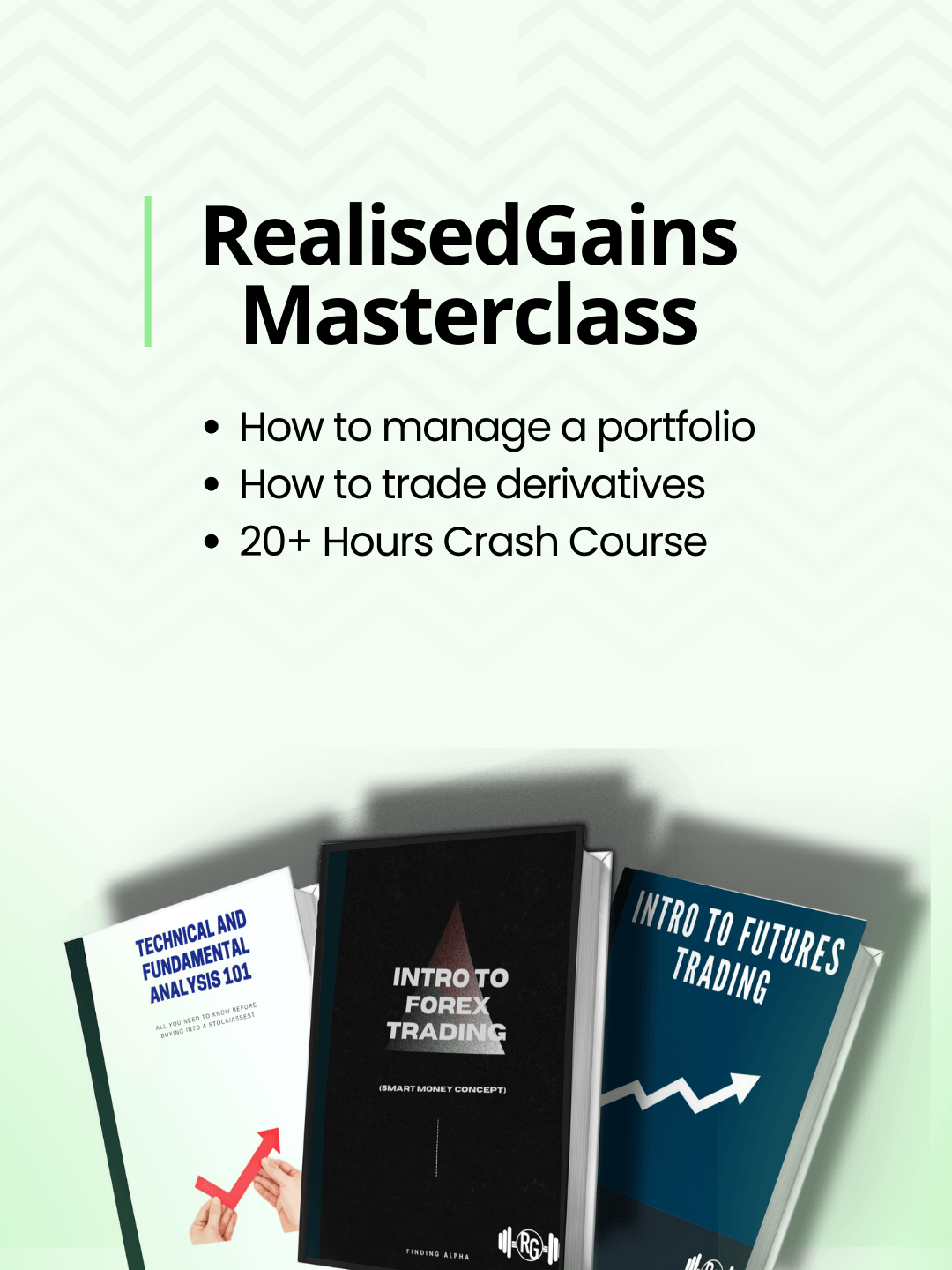
With over a decade of expertise spanning investment advisory, investment banking analysis, oil trading, and financial advisory roles, RealisedGains is committed to empowering retail investors to achieve lasting financial well-being. By delivering meticulously curated investment insights and educational programs, RealisedGains equips individuals with the knowledge and tools to make sophisticated, informed financial decisions.


Founder, Analyst
With over a decade of expertise spanning investment advisory, investment banking analysis, oil trading, and financial advisory roles, RealisedGains is committed to empowering retail investors to achieve lasting financial well-being. By delivering meticulously curated investment insights and educational programs, RealisedGains equips individuals with the knowledge and tools to make sophisticated, informed financial decisions.

© 2026 RealisedGains | All Rights Reserved | www.realisedgains.com
The go to platform that keeps you informed on the financial markets. Best of all, it's free.
RealisedGains
The go to platform that keeps you informed on the financial markets. Best of all, it's free.
About
Products
Tools
Market News
Personal Finance
Socials
© 2026 RealisedGains | All Rights Reserved | www.realisedgains.com