
Cashback vs Miles: Which One Gives More Value in 2026?
Every time someone gets a credit card in Singapore, they eventually face the same question:
Should I chase cashback or miles?
Cashback sounds simple. You spend money, you get money back.
Miles sounds more exciting. You spend money, earn points, and eventually redeem them for flights, upgrades, or even business-class seats.
But in 2026, with higher living costs, rising travel demand, card restrictions, minimum spends, cashback caps, foreign currency fees, and miles devaluation risks, the better question is not:
“Which one gives more value?”
It is:
“Which one gives more value for the way I actually spend?”
Because the wrong card strategy can make you feel like you are “earning rewards” while actually leaving money on the table.
The Simple Difference Between Cashback and Miles
Cashback is straightforward. You receive a rebate, usually as a statement credit, cash credit, or rewards that reduce your card bill.
Miles are different. Instead of getting cash back directly, you earn points or miles that can be converted into airline miles and used for flights, upgrades, or travel perks.
MoneySmart’s 2026 guide summarises the difference clearly: cashback cards offer direct, predictable savings on daily spending such as groceries, dining, and transport, while miles cards are better suited to travellers who want flight perks, upgrades, and travel-related value.
So the first distinction is this:
Reward type
What you get
Main benefit
Cashback
Money back
Simple, predictable savings
Miles
Travel rewards
Potentially higher value, especially for premium flights
Cashback is easier to understand. Miles can be more powerful, but only if you know how to redeem them well.
Why Cashback Feels Better for Most People
Cashback wins on simplicity. You do not need to understand award charts, redemption availability, transfer partners, fuel surcharges, blackout dates, or whether one mile is worth 1 cent or 2 cents. You just spend, meet the card conditions, and get a rebate.
That makes cashback especially attractive if your spending is mainly on:
Spending pattern
Why cashback may work better
Groceries
Predictable monthly spend
Dining
Easy category matching
Transport
Daily recurring expense
Online shopping
Often eligible for higher cashback categories
Bills
Practical everyday savings
Low-to-moderate spend
Easier to benefit without chasing large redemptions
MoneySmart’s cashback credit card guide says choosing the right cashback card is not just about the highest advertised rate, but about matching the card to your actual spending patterns, such as groceries, dining, commuting, or online shopping.
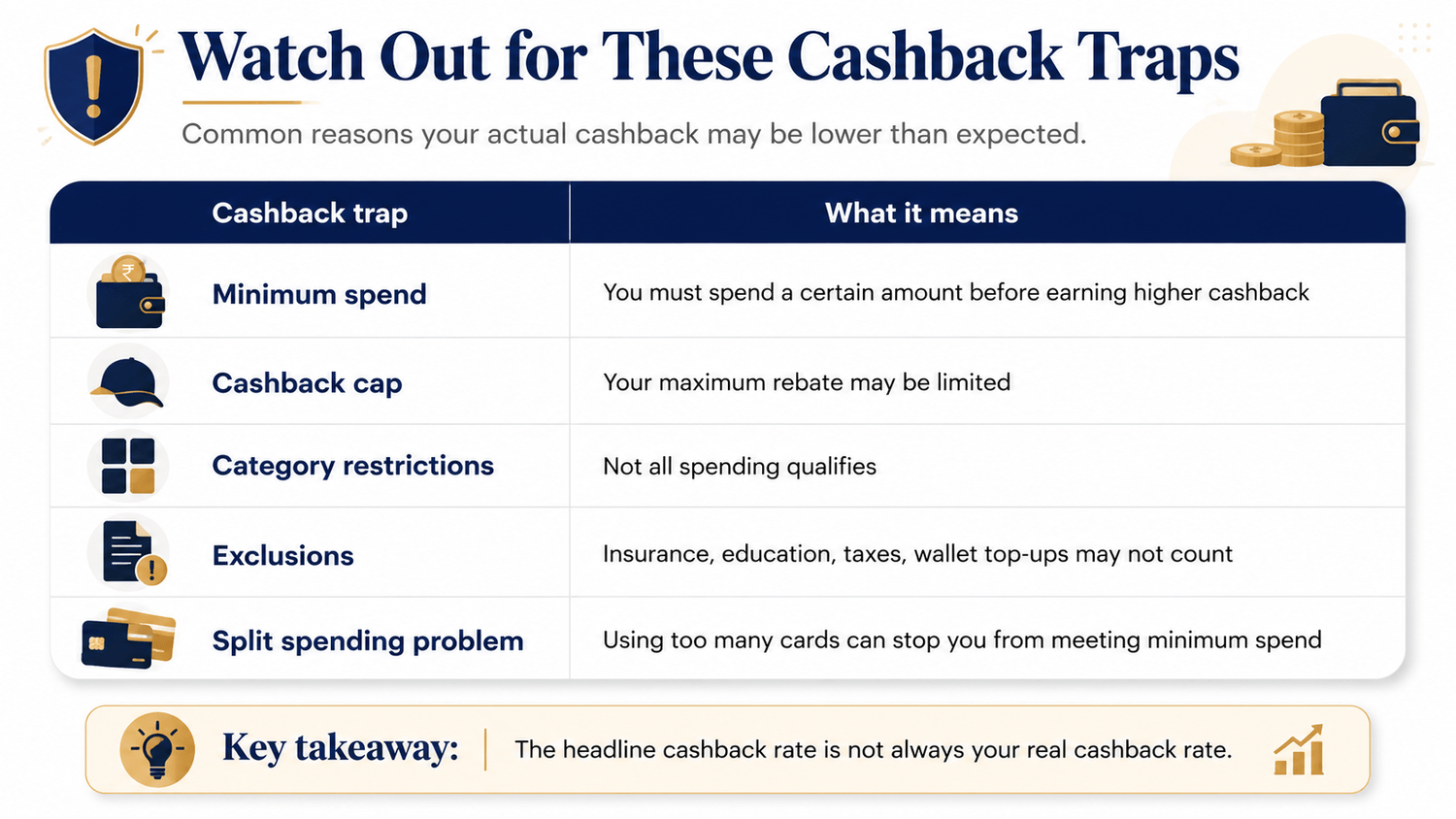
That is important because cashback cards often come with conditions. Some cards require a minimum monthly spend. Some cap the cashback you can earn. Some give high rates only on specific categories. SingSaver’s 2026 credit card strategy guide notes that many popular cashback cards have minimum spend thresholds around S$800 or S$1,000 per month, and if your spending is below that, a no-minimum-spend card may be more suitable. So cashback is simple, but not always effortless. The mistake people make is looking only at the headline rate.
For example:
“Up to 8% cashback” sounds amazing. But if the card has an $800 minimum spend, category exclusions, and a monthly cashback cap, your real return may be much lower.
Why Miles Can Give More Value
Miles can be more valuable than cashback because travel redemptions are not always valued at a fixed cash rate. A cashback card that gives 1.5% back gives you $1.50 for every $100 spent.
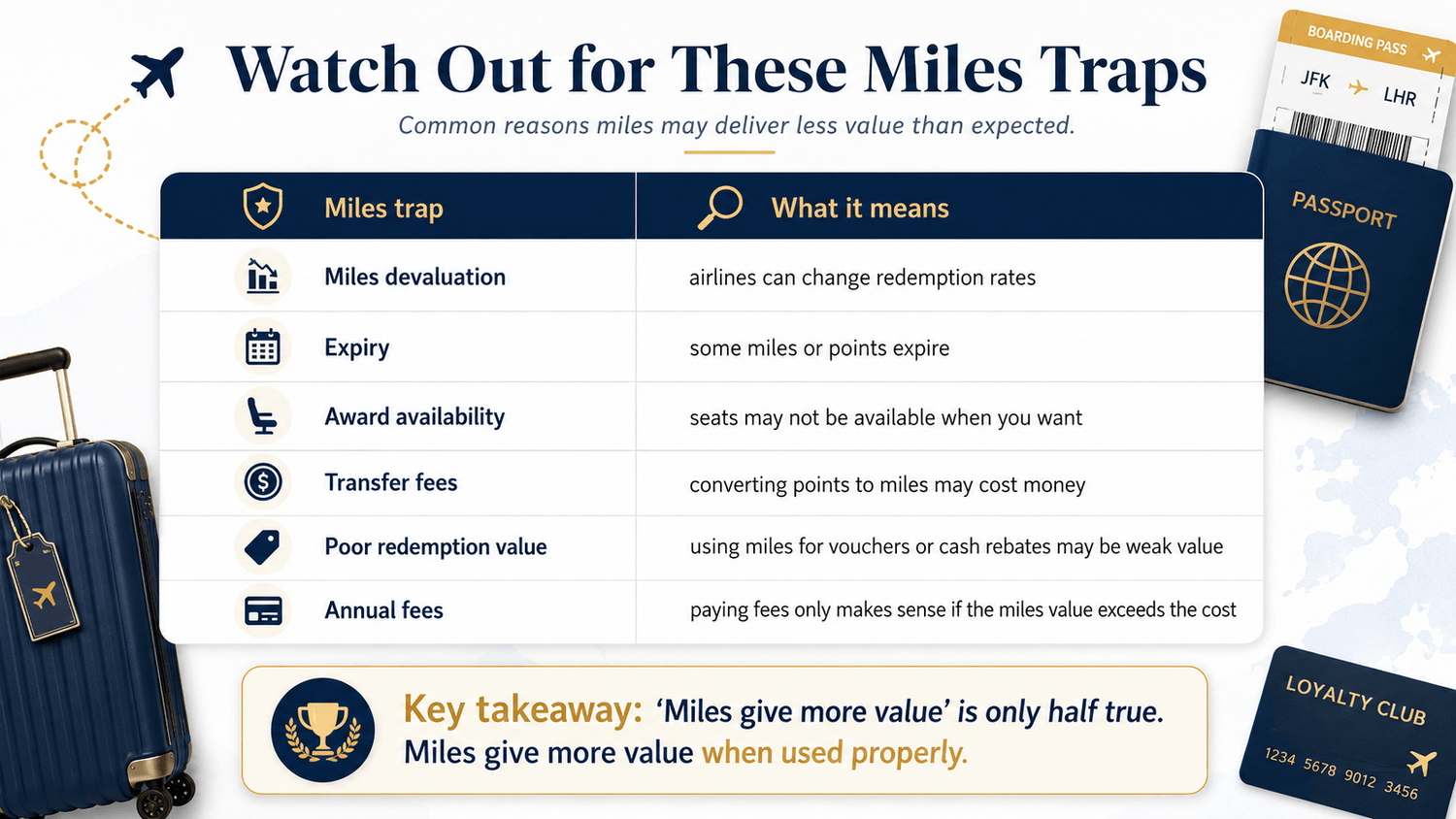
A miles card earning 4 miles per dollar gives you 400 miles for every $100 spent. The value depends on how you redeem those miles. If you redeem miles poorly, the value may be mediocre. If you redeem miles well, especially for premium cabin flights, the value can beat cashback. ShopBack’s 2026 travel credit card guide says miles cards can outperform cashback cards for Singaporeans spending on flights and hotels if the miles are redeemed for business or premium economy travel, where a mile may be worth around SGD 0.015 to SGD 0.025. It also notes that cashback may be simpler if you usually fly economy and prefer cash in hand.
That is the real miles game.
Miles work better if you…
Why it matters
Travel at least once or twice a year
You have a real use for the miles
Can plan redemptions early
Award seats are limited
Redeem for long-haul or premium cabins
cents-per-mile value is higher
Spend enough to accumulate meaningful miles
Small miles balances can sit unused
Are okay with complexity
Miles require more tracking
Choosing between miles, cashback, or rewards depends on your spending habits and priorities.
So miles are not “free travel.” They are a game of optimisation.
The Real Comparison: Guaranteed Value vs Potential Value
The best way to explain cashback vs miles is this:
Factor
Cashback
Miles
Value type
Guaranteed
Potential
Ease of use
Very easy
More complexe.
Best for
Everyday savings
Travel redemptions
Main risk
Caps and minimum spend
Poor redemption value
Emotional appeal
Practical
Aspirational
Best user
Consistent local spender
Frequent or strategic traveller
Cashback gives you less drama. Miles gives you more upside. But the upside only matters if you actually use it.
Example: Spending $2,000 a Month
Let’s say you spend $2,000 a month, or $24,000 a year, on eligible credit card spend.
Cashback scenario
If your average cashback return is 1.5%:
$24,000 × 1.5% = $360 cashback per year
If you use a higher category cashback card and average 5%, after caps and conditions:
$24,000 × 5% = $1,200 cashback per year
But this assumes your spending fits the card categories and you do not exceed the cashback cap.
Miles scenario
If your card earns 1.2 miles per dollar:
$24,000 × 1.2 mpd = 28,800 miles per year
If you use specialised cards and average 4 miles per dollar on eligible spending:
$24,000 × 4 mpd = 96,000 miles per year
Now the value depends on redemption.
If you value each mile at 1 cent:
96,000 miles = about $960 value
If you value each mile at 2 cents:
96,000 miles = about $1,920 value
That is why miles can look more powerful than cashback.
But again, this only works if you redeem well.
The 2026 Rule of Thumb
Here is the simplest way to decide:
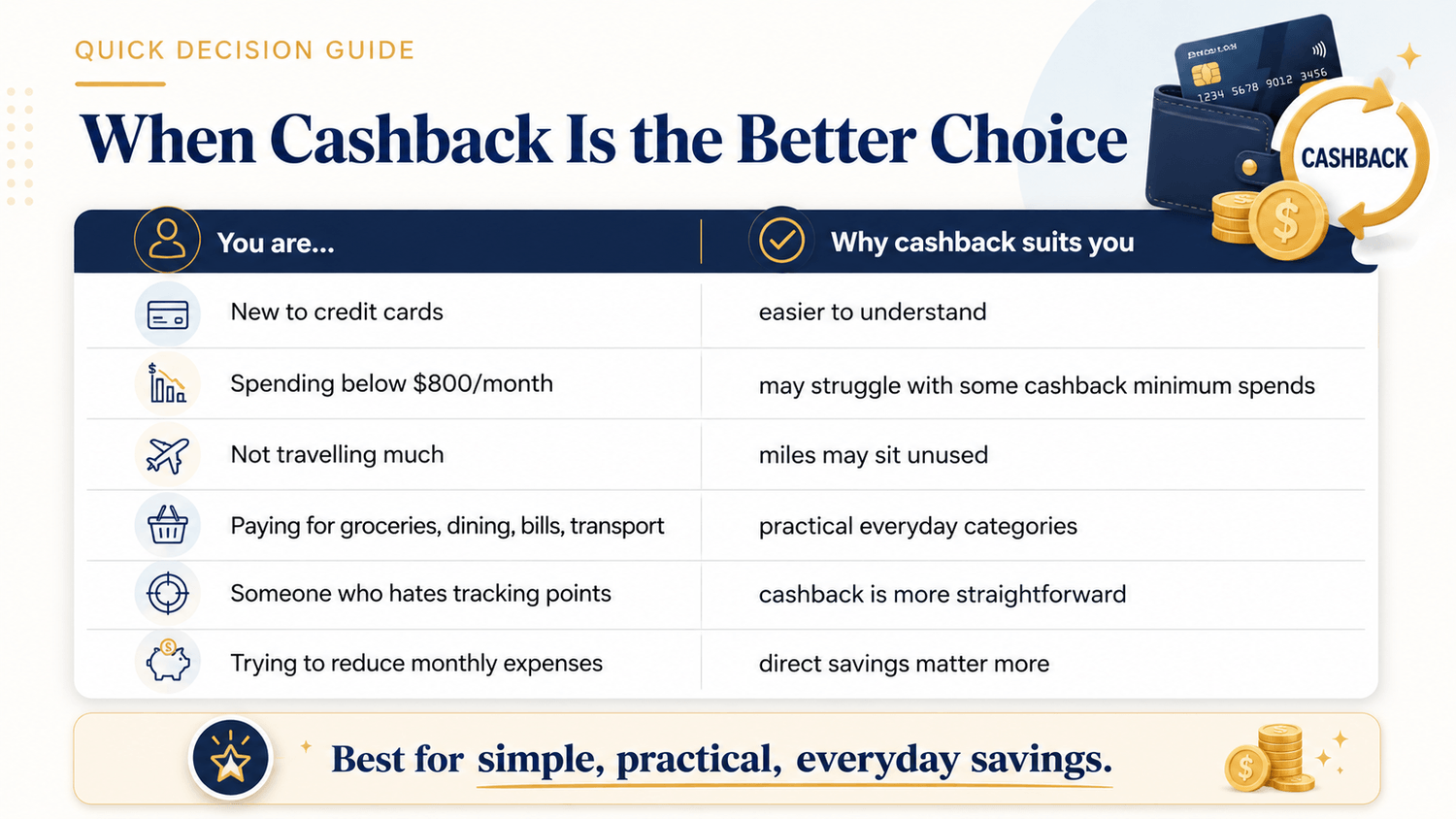
Choose cashback if you want easy, predictable savings.
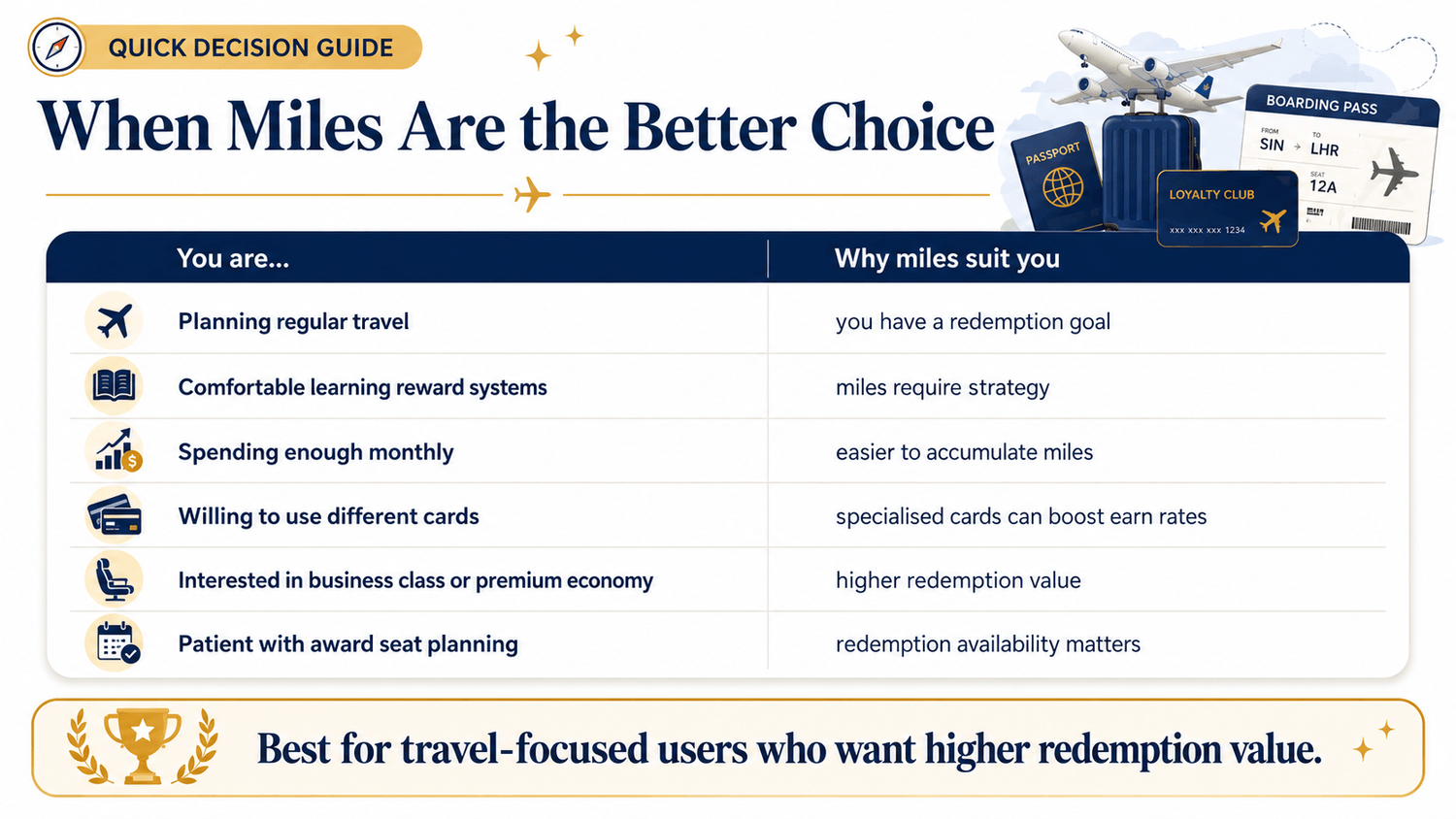
Choose miles if you want higher travel value.
The Hidden Problem With Cashback Cards
Cashback looks simple, but many cards are not as simple as they seem.
The Hidden Problem With Miles Cards
Miles are powerful, but the learning curve is real.
Can You Use Both Cashback and Miles?
Yes and honestly, this is probably the smartest answer for many people.
A simple hybrid strategy could look like this:
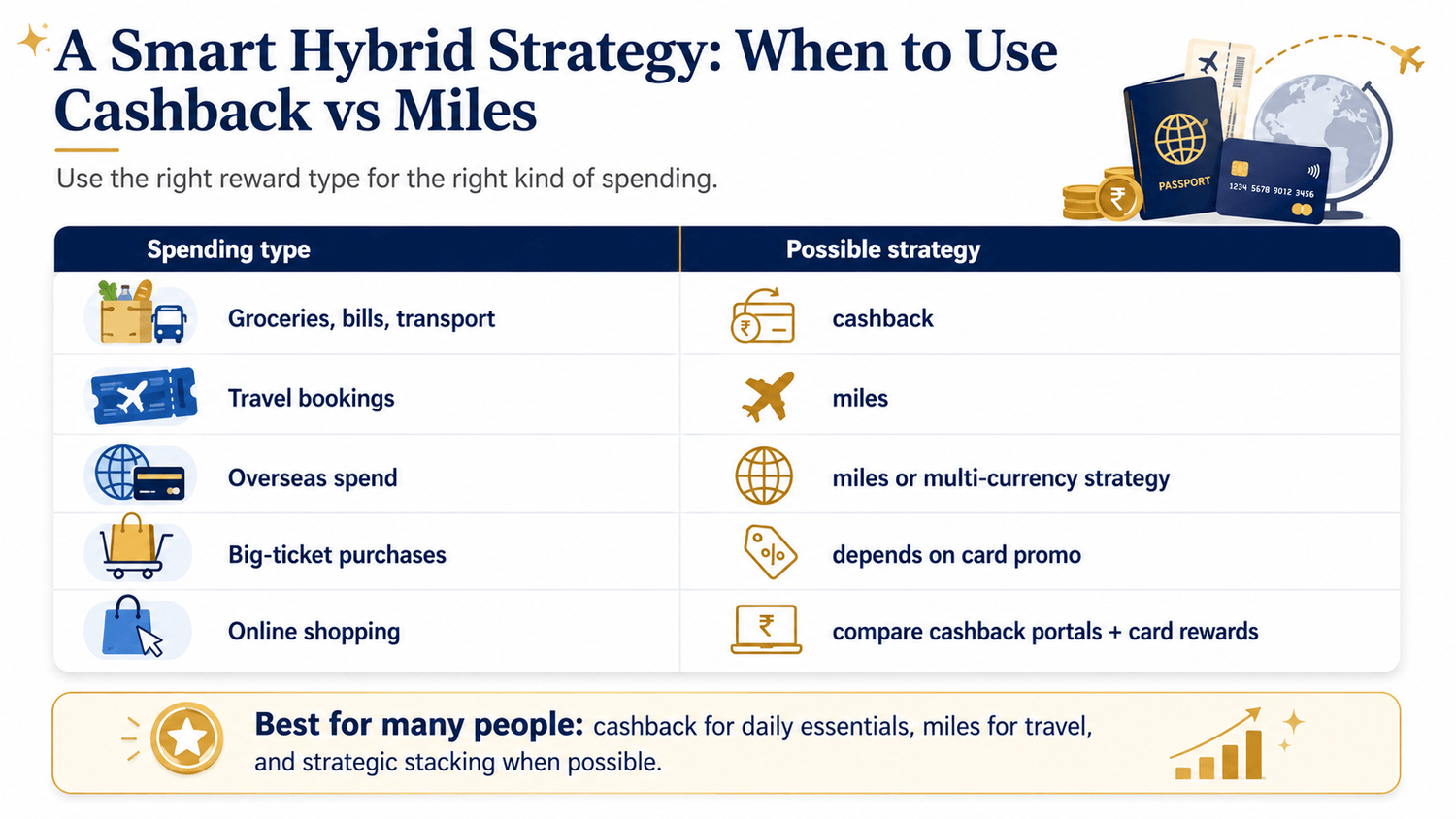
While you usually cannot earn both cashback and miles from the same credit card on one purchase, you may be able to stack separate platform cashback or loyalty rewards with your card rewards on eligible online purchases. That means the real winner may not be cashback or miles. The winner may be stacking rewards properly.
So, Which Gives More Value in 2026?
The honest answer: Miles usually give more maximum value. Cashback gives more reliable value.
If you redeem miles for premium travel, miles can beat cashback.
If you mostly want savings on groceries, dining, shopping, transport, and bills, cashback is usually easier and more practical.
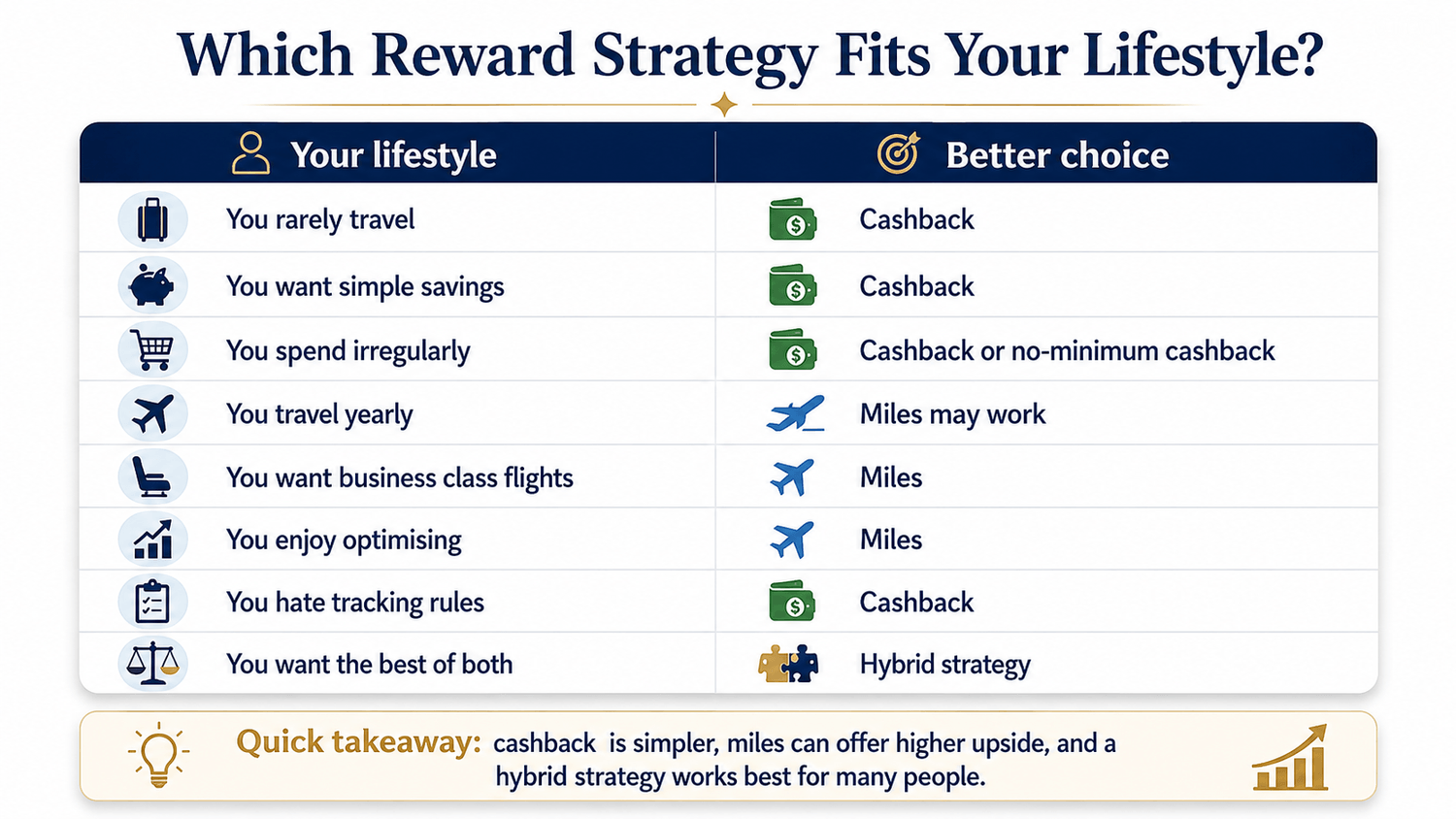
Here is the clearest way to decide:
Final Takeaway
Cashback is like getting a discount on your life. Miles are like building a travel fund with extra steps. In 2026, the better option is not the one with the flashiest advertised rate. It is the one that fits your actual behaviour. If you want simplicity, go with cashback. If you want travel upside and are willing to learn the game, go miles. If you are somewhere in between, use cashback for daily essentials and miles for travel-related or high-earning categories. Because the best credit card strategy is not the one that sounds the most impressive. It is the one you can actually use properly.
Use our credit card comparison tool to have a better idea of which would work better for you!

Shaun
Founder
RealisedGains is committed to empowering retail investors to achieve lasting financial well-being. By delivering meticulously curated investment insights and educational programs, RealisedGains equips individuals with the knowledge and tools to make sophisticated, informed financial decisions.



Founder, Analyst
With over a decade of expertise spanning investment advisory, investment banking analysis, oil trading, and financial advisory roles, RealisedGains is committed to empowering retail investors to achieve lasting financial well-being. By delivering meticulously curated investment insights and educational programs, RealisedGains equips individuals with the knowledge and tools to make sophisticated, informed financial decisions.
Cashback vs Miles: Which One Gives More Value in 2026?

© 2026 RealisedGains | All Rights Reserved | www.realisedgains.com
The go to platform that keeps you informed on the financial markets. Best of all, it's free.
The go-to platform that keeps you informed on the financial markets.
© 2026 RealisedGains | All Rights Reserved | www.realisedgains.com